
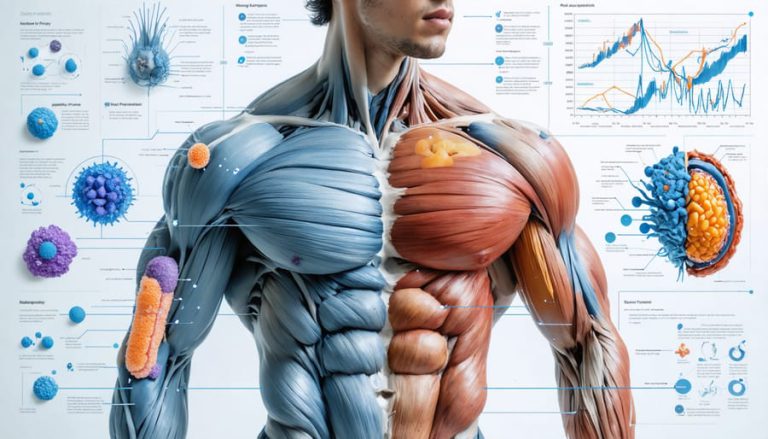
The science behind building muscle is some complex shit, but if your serious about your fitness goals then it's going to help knowing the facts. Building muscle mass is a multifaceted process that draws on principles from biology, physiology, and biochemistry. Understanding the mechanisms that drive muscle growth not only benefits athletes and fitness enthusiasts but also informs professionals working with clients aiming to improve their strength and physique. This case study will delve into the intricate science behind muscle hypertrophy, discussing the biological processes, effective training methodologies, nutritional requirements, and recovery strategies necessary to optimize muscle development.
The Fundamentals of Muscle Anatomy
To appreciate the science of muscle building, one must first understand the structure of skeletal muscle. Composed of muscle fibers bundled together, skeletal muscle can be categorized primarily into two types: Type I (slow-twitch) fibers and Type II (fast-twitch) fibers. Type I fibers are more endurance-oriented, benefiting activities like long-distance running, while Type II fibers are geared toward strength and power, making them crucial for quick, intense bursts of energy.
Muscles are made up of hundreds to thousands of these fibers, and each fiber can contract and generate force. Damaging these fibers through exercise, particularly resistance training, triggers a biological process called muscle hypertrophy, where fibers grow larger and stronger in response to stress. This growth is mainly driven through two interrelated processes: mechanical tension and metabolic stress.
Mechanical Tension and Muscle Damage
The principle of mechanical tension involves the load placed on the muscle during resistance training. As muscles contract against resistance, they undergo microtears—minute injuries to the muscle fibers that activate the body’s repair mechanisms. This process is fundamental for muscle growth, as it highlights the importance of progressive overload in training regimes. Progressive overload refers to the gradual increase of stress placed on the body during exercise.
A classic example is a person following a weightlifting program that steadily increases the weights lifted over several weeks. Each increase in weight generates greater mechanical tension and a corresponding increase in muscle fiber recruitment. Consequently, the need for adaptation arises, and the body responds by repairing the damaged fibers, resulting in hypertrophy. The International Society of Sports Nutrition emphasizes the significance of volume, intensity, and frequency in training to create sufficient mechanical tension necessary for muscle growth.
Metabolic Stress
In parallel to mechanical tension, metabolic stress is crucial for muscle growth. This stress arises during intense exercise as a result of the accumulation of metabolic byproducts such as lactate, hydrogen ions, and inorganic phosphates. When a muscle is put under enough stress, fatigue sets in, causing the body to adapt to these challenging conditions.
Studies indicate that metabolic stress can promote the release of hormones such as growth hormone and insulin-like growth factor (IGF-1), both vital players in muscle growth. Furthermore, metabolic stress may also facilitate a process called hyperplasia, where muscle fiber number can increase, although this contribution remains a topic of scientific debate.
Hormonal Response
Hormones play a pivotal role in muscle growth and can either enhance or inhibit the hypertrophic process. Testosterone and growth hormone are prominent anabolic (muscle-building) hormones. Testosterone increases protein synthesis and muscle mass while reducing muscle breakdown, creating an overall anabolic environment conducive to growth. Exogenous testosterone, while often used improperly, is a stark indicator of its potency in augmenting muscle mass and should be seen as a tool rather than a norm for safe training.
Additionally, insulin’s anabolic effects cannot be overlooked. It facilitates nutrient uptake into muscle cells and inhibits protein catabolism. When proper nutrition is paired with resistance training, the body can utilize these hormones effectively to create muscle growth conducive environments.
Nutritional Strategies for Muscle Development
While exercise provides the stimulus for muscle growth, nutrition supplies the resources required for the repair and building process. An overview of nutritional strategies includes macronutrient composition, meal timing, hydration, and supplementation.
Macronutrient Composition
The primary macronutrients—proteins, carbohydrates, and fats—work synergistically to promote muscle development. Proteins serve as the building blocks for muscle repair and growth. For optimal protein synthesis, professionals recommend a daily intake of 1.6 to 2.2 grams of protein per kilogram of body weight, depending on the intensity and frequency of training.
Carbohydrates are equally important, providing the necessary energy to fuel intense workouts. Consuming adequate carbohydrates helps restore glycogen stores depleted during exercise and supports recovery. Furthermore, carbohydrates play a role in stimulating insulin release, which is essential for nutrient delivery post-workout.
Dietary fats, while often overlooked, are significant for hormone production and overall health. Including healthy fats from sources such as nuts, seeds, and avocados can enhance hormone regulation processes, thereby supporting muscle growth.
Meal Timing
The concept of nutrient timing revolves around consuming specific nutrients around workout times to maximize muscle gains. It’s widely accepted that consuming protein-rich foods immediately before or after training can stimulate muscle protein synthesis. Pre-workout meals, ranging from 30 grams of protein to 50 grams of carbohydrates, can ensure participants have adequate energy reserves and amino acids during their workout.
Post-workout recovery is crucial as well. The anabolic window, often cited within the first 30 minutes to two hours post-exercise, is a critical time to optimize muscle repair and glycogen synthesis. A combination of protein and carbohydrates in a post-workout meal has been shown to enhance muscle recovery.
Recovery and Its Critical Role
While training is essential, recovery is perhaps more crucial in the context of muscle building. Recovery encompasses not just rest but also elements such as sleep and active rest. During sleep, the body enters a restorative phase, releasing growth hormones that promote repair and growth. Professionals recommend that adults aim for 7-9 hours of quality sleep per night to maximize recovery.
Active recovery, which includes low-intensity exercises, stretching, or yoga, helps maintain blood flow and oxygen delivery to recovering muscles, speeding up the recovery process. Furthermore, hydration must not be overlooked; adequate fluid intake supports metabolic processes and nutrient transportation within the body, essential for recovery.
The Genetic Factor
Genetics significantly influences individual responses to training, including muscle-building capabilities. Genetic predispositions may dictate muscle fiber distribution, hormonal profiles, and recovery capabilities. For instance, some individuals may possess a higher concentration of Type II muscle fibers, providing a natural advantage in strength and power activities.
That said, recognizing genetic factors should not deter individuals from pursuing their muscle-building goals. While genetics can influence potential, diet, training, and effort remain primary determinants in achieving success in muscle growth.
Case Study: The Transformation of an Athlete
To illustrate the principles of muscle building in a practical context, consider the case study of an amateur bodybuilder, Alex, who sought to transform his physique through a structured approach to resistance training and nutrition.
Initial Assessment
When Alex began his quest, he was 5'10" and weighed 160 pounds, presenting a typical ectomorphic body type, characterized by a lean physique and difficulty gaining mass. His training consisted primarily of isolation movements and lacked a well-defined structure, resulting in minimal muscle gains over previous years.
Training Program Implementation
Under the guidance of a fitness professional, Alex adopted a progressive resistance training program targeting compound lifts—squats, deadlifts, bench presses, and overhead presses—emphasizing the principle of progressive overload. His program consisted of training four times a week with higher volume sessions to induce mechanical tension and metabolic stress.
Nutritional Interventions
Simultaneously, Alex undertook a nutritional overhaul. With a daily caloric intake calibrated to support muscle gains, he aimed for a strategic macronutrient distribution of 30% protein, 50% carbohydrates, and 20% fats. He emphasized protein timing around workouts and monitored progress consistently, adjusting caloric intake as necessary.
Recovery Modalities
Understanding the significance of recovery, he implemented rest days and dedicated time for sleep, ensuring he achieved at least eight hours each night. Incorporating regular hydration practices and active recovery days, such as light aerobic activities, facilitated his body’s recovery and adaptation to the training stimulus.
Results
After six months of commitment to this structured approach, Alex reported a weight gain of 20 pounds, with significant increases in his lifts across all major lifts. This transformation not only reflected the physical changes in muscle mass but also instilled a greater understanding of personal limits, resilience, and the scientific principles underpinning muscle growth.
Conclusion
So, like I said guys, building muscle is some complex shit 🤣 A scientifically driven endeavor, requiring a nuanced understanding of various physiological processes. Professionals working in the fitness industry must consider aspects such as mechanical tension, metabolic stress, nutrition, recovery, and individual genetic variance when developing training protocols for muscle hypertrophy.
The case study of Alex serves as a testament to the science of muscle building, illustrating that a well-rounded approach grounded in scientific principles can yield remarkable results. For ongoing success in the field, professionals must remain informed about emerging research, optimizing methods to aid individuals on their muscle-building journeys while recognizing that the interplay between training and nutrition will always be foundational to achieving desired outcomes.


.png)
89.png)


0 Comments